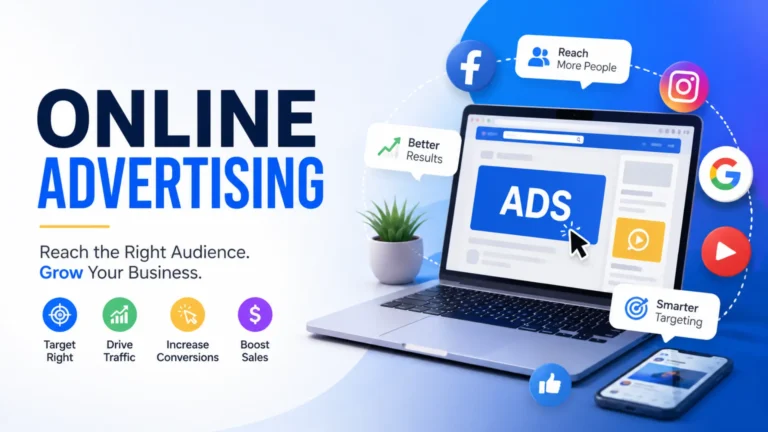
Online advertising is the process of promoting a product, service, or brand through digital channels such as Google, Facebook, Instagram, YouTube, TikTok, LinkedIn, websites, apps, and email. Instead of waiting for customers to find your business, paid ads help you reach the right people at the right time.
In 2026, digital ads matter more than ever because customers spend much of their day online. They search on Google, watch videos, scroll social media, read blogs, check emails, and shop through online platforms. For businesses, this creates a powerful opportunity to attract new leads, increase website traffic, build brand awareness, and generate sales.
The digital advertising industry is still growing fast. IAB reported that internet advertising revenue reached nearly $300 billion in 2025, showing strong demand for paid digital promotion.
How Online Advertising Works
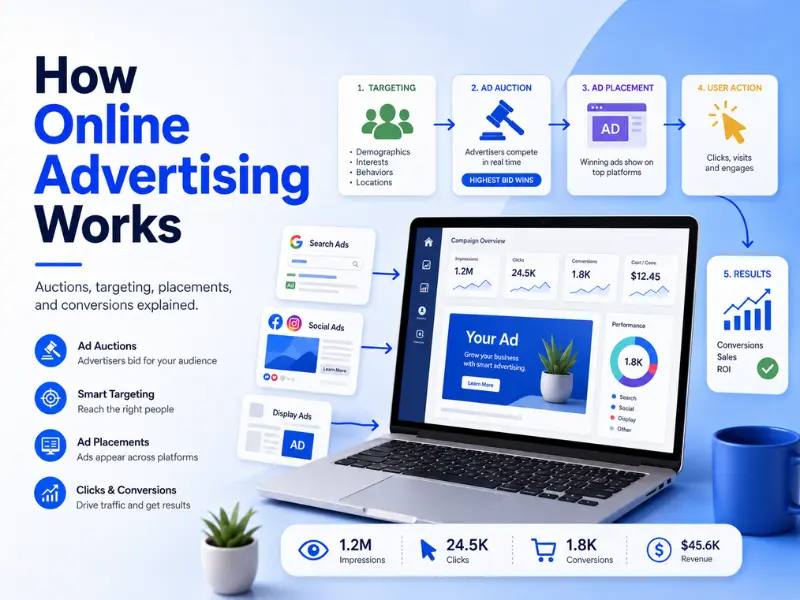
Most online advertising works through three main parts: auctions, targeting, and placements.
An ad auction happens when a platform decides which ad should appear to a user. For example, Google Ads runs an auction whenever someone searches on Google or visits a site that can show ads. The auction helps decide whether your ad appears and where it appears.
Targeting means choosing who should see your ads. You can target people based on location, age, interests, search keywords, online behavior, device type, or previous interaction with your website. Good targeting helps you avoid wasting money on people who are unlikely to buy.
Placements are the spaces where ads appear. Your ads can show on search results, YouTube videos, Facebook feeds, Instagram Stories, TikTok videos, websites, blogs, mobile apps, Gmail, and other digital spaces.
Meta also uses an ad auction system to decide which ad to show to a person at a specific time, to create value for both users and businesses.
Types of Online Advertising
Search Ads
Search ads appear when people search for something on platforms like Google, Bing, or Microsoft Search. These ads are powerful because they target users with strong intent. For example, if someone searches “best digital marketing agency near me,” they may already be ready to contact a company.
Search ads are best for service businesses, eCommerce stores, local companies, software brands, medical services, and high-intent lead generation.
Display Ads
Display ads are banner or image-based ads shown on websites, blogs, apps, and news platforms. They are useful for brand awareness, remarketing, and visual promotion.
For example, a person may visit your website but leave without buying. Later, they may see your display ads on another website. This reminds them of your business and brings them back.
Social Media Ads
Social media ads appear on platforms like Facebook, Instagram, LinkedIn, TikTok, X, Pinterest, and Snapchat. These ads are great for building awareness, generating leads, promoting products, and engaging with audiences.
Social media ads work especially well when your creative is strong. Good images, videos, captions, and offers can make a big difference.
Video Ads
Video ads appear on platforms like YouTube, TikTok, Instagram Reels, Facebook Reels, and streaming platforms. They are useful for storytelling, product demonstrations, brand promotion, and customer education.
A short video can explain your product faster than a long paragraph. That is why video ads are becoming more important for both small and large businesses.
Native Ads
Native ads match the look and feel of the platform where they appear. They often look like recommended articles, sponsored posts, or content suggestions. Native ads are useful because they feel less aggressive than traditional banner ads.
They work well for blog promotion, lead generation, content marketing, and awareness campaigns.
Email Ads
Email ads are promotional messages sent through email newsletters or email marketing campaigns. Businesses use them to promote offers, share updates, recover abandoned carts, and build long-term customer relationships.
Email advertising works best when the message is personal, helpful, and relevant to the reader.
Key Pricing Models Explained
CPC: Cost Per Click
CPC means you pay when someone clicks your ad. This model is common in search ads and social media ads. It is useful when your goal is website traffic, leads, or sales.
CPM: Cost Per Thousand Impressions
CPM means you pay for every 1,000 ad impressions. An impression means your ad was shown. This model is useful for brand awareness campaigns.
CPA: Cost Per Acquisition
CPA means you pay based on a desired action, such as a sale, signup, booking, or app install. It is one of the most performance-focused pricing models.
CPL: Cost Per Lead
CPL means you pay for each lead. A lead can be a form submission, phone call, consultation request, or quote request. This model is common for service-based businesses.
CPV: Cost Per View
CPV means you pay when someone views your video ad. This model is common on YouTube and other video platforms. It is useful for video awareness and product education campaigns.
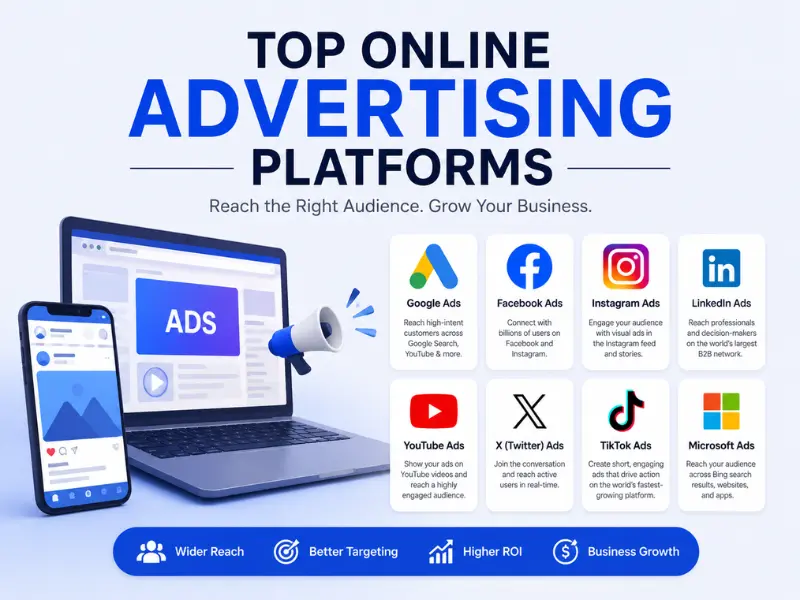
Top Online Advertising Platforms
Google Ads
Google Ads is one of the strongest platforms for search intent. It allows businesses to appear when people are actively searching for products or services. Google Ads also offers display ads, YouTube ads, shopping ads, app ads, and Performance Max campaigns.
Meta Ads
Meta Ads includes Facebook, Instagram, Messenger, and Audience Network. It is ideal for visual ads, lead generation, retargeting, brand awareness, and e-commerce promotion.
Amazon Ads
Amazon Ads is powerful for product-based businesses. It helps sellers promote products directly where customers are already shopping. This platform is especially useful for e-commerce brands.
Microsoft Ads
Microsoft Ads works across Bing, Microsoft Edge, Outlook, MSN, and partner networks. It can be a strong option for businesses that want search traffic beyond Google.
LinkedIn Ads
LinkedIn Ads is best for B2B companies, professional services, software companies, consultants, recruitment, education, and corporate lead generation. It allows targeting by job title, industry, company size, and professional interest.
TikTok Ads
TikTok Ads are useful for brands that want to reach younger and highly engaged audiences through short-form video. Creative style is very important on TikTok because users prefer content that feels natural, entertaining, and fast-moving.
How to Choose the Right Platform for Your Business
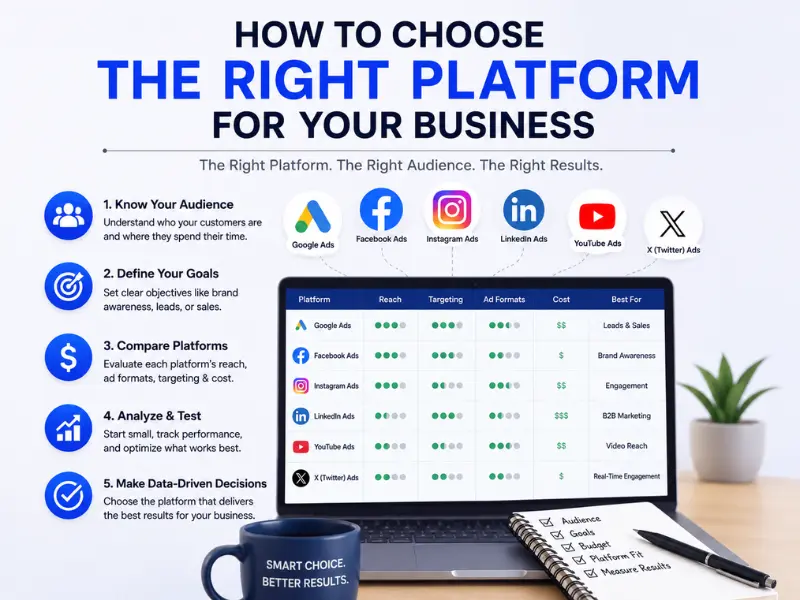
The best Online marketing platform depends on your business goal, audience, budget, and offer.
Use Google Ads if people already search for your product or service. For example, local services, emergency services, legal services, healthcare, repairs, and high-intent products often perform well on Google.
Use Meta Ads if your product is visual or emotional. Fashion, beauty, food, real estate, coaching, local services, events, and eCommerce brands can perform well on Facebook and Instagram.
Use LinkedIn Ads if you sell to professionals or businesses. It is more expensive than many other platforms, but it can produce high-quality B2B leads.
Use Amazon Ads if you sell physical products and want to reach buyers inside a shopping environment.
Use TikTok Ads if your brand can create short, engaging, and trend-friendly video content.
Use Microsoft Ads if you want extra search traffic and want to test a platform that may have less competition in some industries.
Common Mistakes to Avoid
Many businesses lose money because they start running ads without a clear strategy. The first mistake is targeting everyone. A broad audience may sound good, but it often wastes budget. You need to define your ideal customer clearly.
The second mistake is using weak ad creatives. A boring image, unclear headline, or poor video can reduce performance even if the targeting is good.
The third mistake is sending traffic to a poor landing page. Your ad may get clicks, but if your website is slow, confusing, or missing a clear call to action, people will leave.
The fourth mistake is failing to track conversions. You must know which ads generate calls, leads, sales, or bookings. Without tracking, you cannot improve your campaigns properly.
The fifth mistake is stopping ads too early. Some campaigns need testing time. You may need to test different audiences, headlines, offers, images, videos, and landing pages before finding what works.
Join Our Community
Join our community on Facebook, and don’t forget to subscribe to us on YouTube for new content each week.
Final Thought
Digital ad campaigns are one of the most effective ways to grow a business in 2026, but success does not come from simply spending money. It comes from choosing the right platform, understanding your audience, creating strong ads, tracking results, and improving campaigns over time.
FAQs
1. What are digital marketing ads?
Digital marketing ads promote products or services through digital channels like search engines, social media, websites, apps, and email.
2. How does online advertising work?
It works through ad auctions, audience targeting, placements, budgets, and bidding models that decide when and where your ads appear.
3. Which platform is best for online ads?
Google is best for search intent, Meta for social reach, LinkedIn for B2B, Amazon for products, and TikTok for short video campaigns.
4. What is CPC in advertising?
CPC means cost per click. You pay when someone clicks your ad, making it useful for traffic, leads, and sales campaigns.
5. What mistakes should beginners avoid?
Avoid unclear goals, weak targeting, poor landing pages, no conversion tracking, and stopping campaigns before proper testing.